
Endoscopy
- Home
- Endoscopy
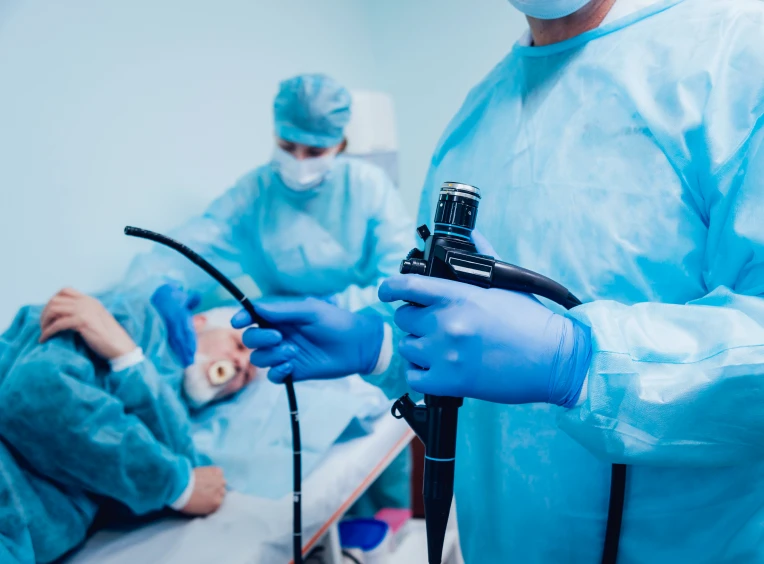
Endoscopy plays a vital role in the management of patients with liver disease, particularly those with cirrhosis and portal hypertension. It is both a diagnostic and therapeutic tool, helping identify complications early and manage them effectively.
Indications
1)Screening of esophageal and gastric varices—dilated veins that can bleed and become life-threatening if not addressed in time. For patients with advanced liver disease, timely endoscopic surveillance allows early detection of high-risk findings and guides preventive care
2) Treatment of Gastroesophageal varices:- Endoscopic procedures such as variceal band ligation help prevent and control bleeding. In addition, endoscopy is used to evaluate symptoms like upper abdominal discomfort, anemia, or suspected gastrointestinal bleeding.
These procedures are performed with careful consideration of the patient’s overall condition, ensuring safety and appropriate sedation.
Endoscopic procedures to control gastroesophageal variceal bleeding in patients with cirrhosis
Endoscopic variceal band ligation is the standard treatment for esophageal varices and is highly effective in both acute bleeding and secondary prophylaxis. In cases of gastric varices, endoscopic glue therapy (cyanoacrylate injection) is used to achieve hemostasis. These interventions significantly reduce the risk of recurrent bleeding and improve survival.
Endoscopy is also used to treat portal hypertensive gastropathy when bleeding occurs, and to evaluate and manage other sources of gastrointestinal bleeding in cirrhotic patients.
When integrated into a structured liver care plan, endoscopic services significantly reduce complications, improve outcomes, and provide reassurance through proactive monitoring.
FAQ's
Why do liver disease patients need endoscopy?
To detect and treat complications like varices before they bleed
Is endoscopy safe in cirrhosis?
Yes, when performed with proper precautions and monitoring.
How often is endoscopy required?
Depends on disease stage and findings—your doctor will guide you.
What is variceal banding?
They are treated using endoscopic glue injection to control and prevent bleeding.
How are gastric varices treated?
A procedure where dilated veins in the food pipe are tied off to prevent or stop bleeding.
Can endoscopy stop active bleeding
Yes, therapeutic endoscopy is often the first-line treatment to control bleeding.
Will I need repeat endoscopy?
Yes, follow-up sessions are often required to ensure varices are controlled.
Does endoscopy cure liver disease?
No, it treats complications, but ongoing liver care and monitoring remain essential.
Patients feedback
Dealing with a rare condition like this can feel isolating, especially when you don’t fully understand it. What reassured us was the constant support and detailed explanations at every stage, from diagnosis through complication management. We never felt left in the dark. Today, my loved one is stable, and as a family, we feel much more confident and hopeful about the future.
When a loved one is diagnosed with something like autoimmune hepatitis, it’s not just their journey; it becomes the family’s journey too. We were anxious and unsure at first, but the way everything was handled with patience, transparency, and empathy helped us stay strong. We always felt supported, especially during medication adjustments and follow-ups. It made a difficult phase much more manageable.
Consult For
Get an Appointment
Schedule your appointment today and take the first step toward better liver health.