
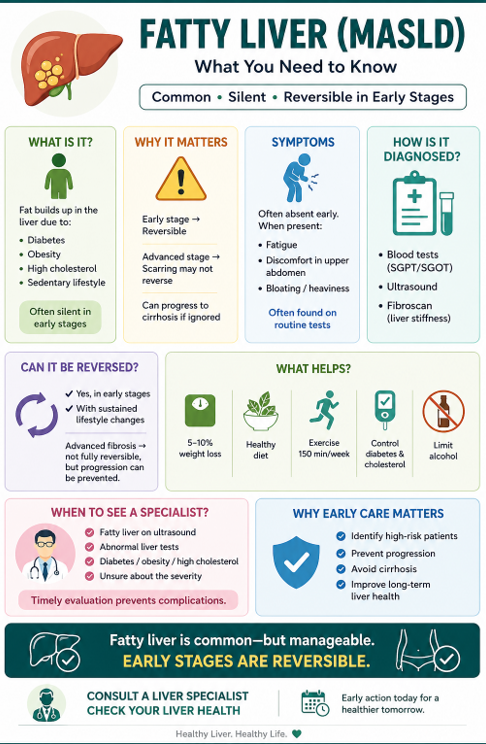
Metabolic dysfunction–associated steatotic liver disease (MASLD)
Metabolic dysfunction–associated steatotic liver disease (MASLD), commonly known as fatty liver, is now one of the most common causes of liver disease worldwide. In India, a significant proportion of adults are affected—often without knowing it. A recent study published in The Lancet reports that nearly 4 in 10 Indians have MASLD.
What makes fatty liver particularly concerning is that its early stages are usually asymptomatic, and the condition is often detected only after significant liver damage has already occurred.
What Is MASLD (Fatty Liver)?
MASLD occurs when excess fat accumulates in the liver, typically in the setting of metabolic risk factors such as:
- Diabetes
- Obesity or increased abdominal fat
- High cholesterol or triglycerides
- Sedentary lifestyle
In many patients, this begins as simple fat accumulation. However, in some, it progresses to inflammation (steatohepatitis), fibrosis, and eventually cirrhosis.
Symptoms of Fatty Liver
Most patients have no symptoms initially. When present, symptoms may include:
- Persistent fatigue
- Mild discomfort in the upper abdomen
- Feeling of heaviness or bloating
- Because symptoms are subtle, many patients are diagnosed incidentally during routine blood tests or ultrasound of abdomen.
Is Fatty Liver Serious?
Fatty liver is not always dangerous—but it should not be ignored.
There are different stages of fatty liver. In the early stage, it is simply fat accumulation in the liver. At this point, it is completely reversible in most patients with the right measures.
However, in some individuals, fatty liver can progress to inflammation and fibrosis (scarring). When fibrosis becomes advanced, the changes are not fully reversible, and there is a risk of progression to cirrhosis and its complications.
The key is timely detection and risk assessment. Not everyone with fatty liver will progress—but identifying those who might is important. With appropriate care, progression can usually be prevented.
How Is Fatty Liver Diagnosed?
Evaluation typically includes:
- Liver function tests (SGPT/SGOT)
- Ultrasound abdomen
- Fibroscan (to assess liver stiffness and fat content)
This help determine whether the condition is mild or requires closer monitoring and treatment.
Can Fatty Liver Be Reversed?
Yes—especially in early stages. With appropriate lifestyle changes, many patients can:
- Reduce liver fat
- Improve liver function
- Prevent progression
However, this requires structured and sustained intervention, not short-term changes.
Treatment of Fatty Liver
Management is individualized and focuses on:
1. Weight Management
A 5–10% reduction in body weight can significantly reduce liver fat and inflammation.
2. Healthy Diet
Follow a balanced diet rich in vegetables, fruits, whole grains, lean proteins, and healthy fats, while limiting sugary drinks, refined carbohydrates, fried foods, and processed snacks.
3. Regular Physical Activity
Aim for at least 150 minutes of moderate exercise per week, such as brisk walking, cycling, swimming, running with twice a week of strength training.
4. Control Metabolic Conditions
Effective management of diabetes,obesity, cholesterol, and blood pressure helps prevent disease progression.
5. Limit Alcohol and Unnecessary Medications
Reducing alcohol intake and avoiding unnecessary medications can further protect liver health.
6. Medical Therapy (Selected Patients)
Considered based on severity and risk profile
When Should You See a Liver Specialist?
- Fatty liver is detected on ultrasound
- Liver tests are persistently abnormal
- You have diabetes, obesity, dyslipidemia
- You are unsure about the severity of your condition
Patients with fatty liver should ideally undergo specialist evaluation for accurate staging and risk assessment, so that timely, targeted intervention can prevent progression and long-term complications.
Why Early Evaluation Matters?
MASLD is one of the few liver conditions where early intervention can completely change outcomes.
Timely assessment helps:
- Identify high-risk patients
- Prevent progression to cirrhosis
- Guide appropriate treatment