
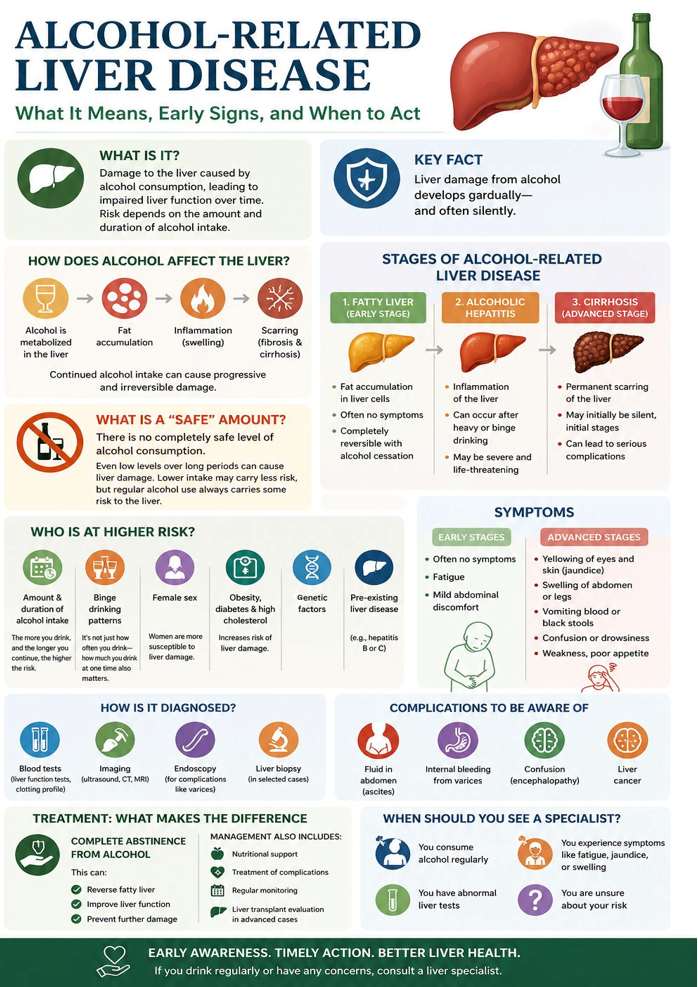
Alcohol-Related Liver Disease: What It Means, Early Signs, and When to Act
Alcohol-related liver disease (ARLD) refers to damage to the liver caused by alcohol consumption, leading to impaired liver function over time. The risk depends on both the amount and duration of alcohol intake.
The important thing to understand is this: Liver damage from alcohol develops gradually—and often silently.
How Does Alcohol Affect the Liver?
Alcohol is metabolized in the liver. Over time, repeated exposure leads to:
- Fat accumulation
- Inflammation (swelling)
- Scarring (fibrosis and cirrhosis)
With continued alcohol intake, this damage can become progressive and irreversible.
Stages of Alcohol-Related Liver Disease
Alcohol-related liver disease does not occur suddenly—it progresses through stages: Fatty Liver (Early Stage)
- Fat accumulation in liver cells
- Often no symptoms
- Completely reversible with alcohol cessation
Alcoholic Hepatitis
- Inflammation of the liver
- Can occur after heavy or binge drinking
- May be severe and, in some cases, life-threatening
Cirrhosis (Advanced Stage)
- Permanent scarring of the liver
- May initially be silent, initial stages
- Can lead to serious complications
What Is a “Safe” Amount of Alcohol?
There is no completely safe level of alcohol consumption.
Even relatively low levels over long periods can cause liver damage. While lower intake may carry less risk, individual susceptibility varies, and regular alcohol use always carries some risk to the liver.
Who Is at Higher Risk?
Not all individuals who drink develop liver disease. Risk depends on:
- Amount and duration of alcohol intake (the more you drink, and the longer you continue, the higher the risk of liver damage)
- Binge drinking patterns (It’s not just how often you drink—how much you drink at one time also matter)
- Female sex (higher susceptibility)
- Obesity, diabetes, and high cholesterol (Increases risk of liver damage)
- Genetic factors
- Pre-existing liver disease (e.g., hepatitis B or C)
Symptoms of Alcohol-Related Liver Disease
Symptoms vary depending on stage: Early stages:
- Often no symptoms
- Fatigue
- Mild abdominal discomfort
Advanced stages:
- Yellowing of eyes and skin (jaundice)
- Swelling of abdomen or legs
- Vomiting blood or black stools
- Confusion or drowsiness
- Weakness, poor appetite
How Is It Diagnosed?
Evaluation includes:
- Blood tests (liver function tests, clotting profile)
- Imaging (ultrasound, CT, MRI)
- Endoscopy (for complications like varices)
- Liver biopsy (in selected cases)
Complications to Be Aware Of
Advanced liver disease can lead to:
- Fluid accumulation in abdomen (ascites)
- Internal bleeding from varices
- Confusion due to toxin buildup (encephalopathy)
- Liver cancer
Treatment: What Makes the Difference
The most important step is: Complete abstinence from alcohol
This can:
- Reverse fatty liver
- Improve liver function
- Prevent further damage
Management also includes:
- Nutritional support
- Treatment of complications
- Regular monitoring
- Liver transplant evaluation in advanced cases
When Should You See a Specialist?
You should seek evaluation if:
- You consume alcohol regularly
- You have abnormal liver tests
- You experience symptoms like fatigue, jaundice, or swelling
- You are unsure about your risk
Alcohol-related liver disease is preventable—and often reversible in early stages. The difference lies in:
- Early recognition of liver injury
- Timely intervention
- Stopping alcohol before damage becomes permanent
If you are unsure about your alcohol intake or liver health, a timely evaluation can help guide the next steps and prevent long-term complications