
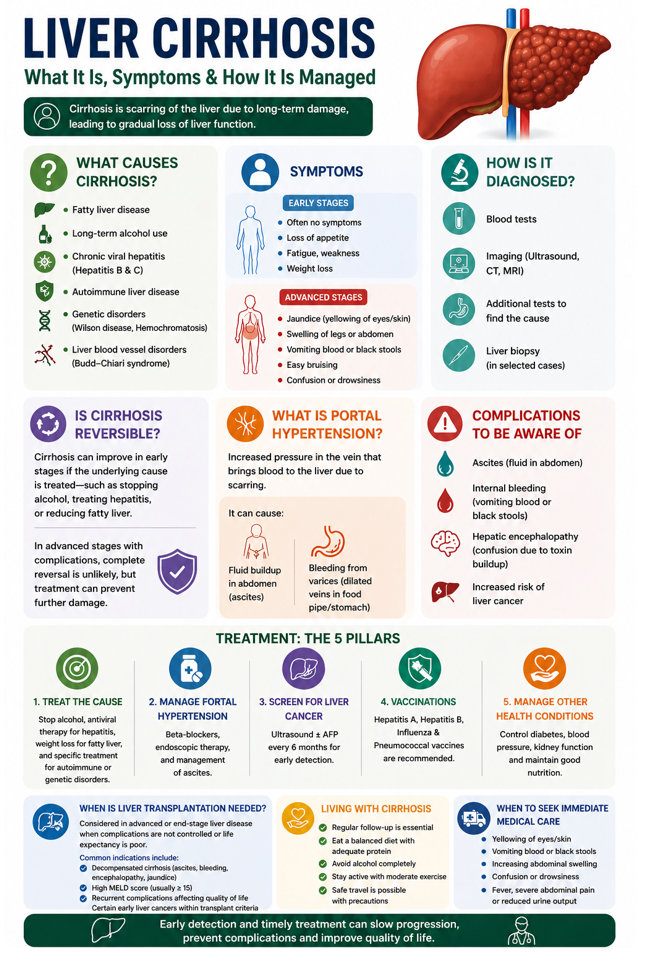
Liver Cirrhosis: What It Means, Symptoms, and How It Is Managed
Liver cirrhosis is a condition in which the liver becomes scarred over time due to long-term damage, leading to gradual loss of its normal function.
It is important to understand that cirrhosis does not develop suddenly—it is usually the result of chronic liver disease over many years.
What Causes Cirrhosis?
Cirrhosis can occur due to several underlying conditions, including:
- Fatty liver disease
- Long-term alcohol use
- Chronic viral hepatitis (B and C)
- Autoimmune liver disease
- Genetic conditions such as Wilson disease
- Vascular disorders affecting the liver
Symptoms of Cirrhosis
Early stages: In many patients, cirrhosis is silent initially and detected on routine tests. When symptoms occur, they may include:
- Fatigue and weakness
- Loss of appetite
- Weight loss
Advanced stages: As the disease progresses, symptoms may become more noticeable:
- Yellowing of eyes and skin (jaundice)
- Swelling of legs or abdomen (fluid accumulation)
- Vomiting blood or black stools
- Easy bruising
- Confusion or drowsiness
How Is Cirrhosis Diagnosed?
Evaluation typically includes:
- Blood tests
- Ultrasound or other imaging (CT/MRI)
- Additional tests to identify the cause
In selected cases, a liver biopsy may be required.
Is Cirrhosis Reversible?
In early stages, if the underlying cause is treated:
- Liver damage may improve over time
In advanced stages with complications:
- Complete reversal is unlikely
- The focus is on preventing progression and managing complications
What Is Portal Hypertension?
Scarring in the liver increases pressure in the blood vessels supplying it—this is called portal hypertension.
It can lead to:
- Fluid accumulation in the abdomen
- Dilated veins (varices) that may bleed
Complications of Cirrhosis
Advanced cirrhosis may lead to:
- Ascites (fluid in abdomen)
- Internal Gastrointestinal bleeding
- Hepatic encephalopathy (confusion due to toxin buildup)
- Increased risk of liver cancer
How Is Cirrhosis Managed?
Treatment focuses on multiple aspects:
1. Treating the underlying cause
- Stopping alcohol
- Treating hepatitis
- Managing fatty liver
2. Managing complications
- Medications for fluid control in abdomen and reducing pressure in dilated veins in esophagus and/or stomach
- Endoscopic treatment for bleeding
- Regular monitoring
3. Preventive care
- Vaccinations
- Regular screening for liver cancer
4. Liver transplant (selected patients)
Not all patients need transplant. It is considered in advanced or worsening disease.
Living with Cirrhosis
- Many patients in early stages can continue normal daily activities
- Moderate exercise is beneficial
- Travel is possible with precautions
- Regular follow-up is essential
When Should You Seek Medical Care?
You should seek urgent evaluation if you notice:
- Jaundice
- Abdominal swelling
- Vomiting blood
- Confusion or drowsiness
- Sudden worsening of symptoms
Cirrhosis is a serious condition—but its course is not the same for every patient.
Early detection and treatment of the cause can slow or even partially reverse damage
Regular follow-up helps prevent complications and improve quality of life
Liver Transplantation for advanced or worsening disease